
WELCOME BONUS 300%
UP TO €2000 + 100
FREE SPINS
UP TO €2000 + 100
FREE SPINS
Home → Roulette
Roulette at Thunderpick
How Much Bonus Wager for 100 Euro Roulette Bet?
Roulette games contribute only 10 percent toward the wagering requirement for the 300% welcome bonus up to €2,000 plus 100 free spins. This contribution rate is significantly lower than the standard 100 percent allocated to slot titles on most platforms. A player placing a 100 Euro bet generates only 10 Euros of eligible turnover against the total requirement. Consequently, high-volume players must deposit much larger sums to clear the bonus conditions efficiently.
The house edge varies by variant, with French Roulette offering a 1.35 percent advantage while European Roulette carries a 2.70 percent edge. These percentages determine the expected loss per 100 Euro wagered before any bonus credits are applied. The 10 percent contribution factor effectively multiplies the theoretical loss required to meet the turnover target. Players should calculate the total deposit needed based on their preferred table game's specific RTP.
Straight bets in roulette pay 35:1 but do not alter the fundamental contribution ratio of the underlying game type. Whether betting on single numbers or complex combinations, the entire stake falls under the restricted 10 percent category. A 100 Euro session thus requires generating 1,000 Euros in base bets to fulfill one unit of wagering. This structure favors slot players who can clear requirements faster through higher contribution rates.
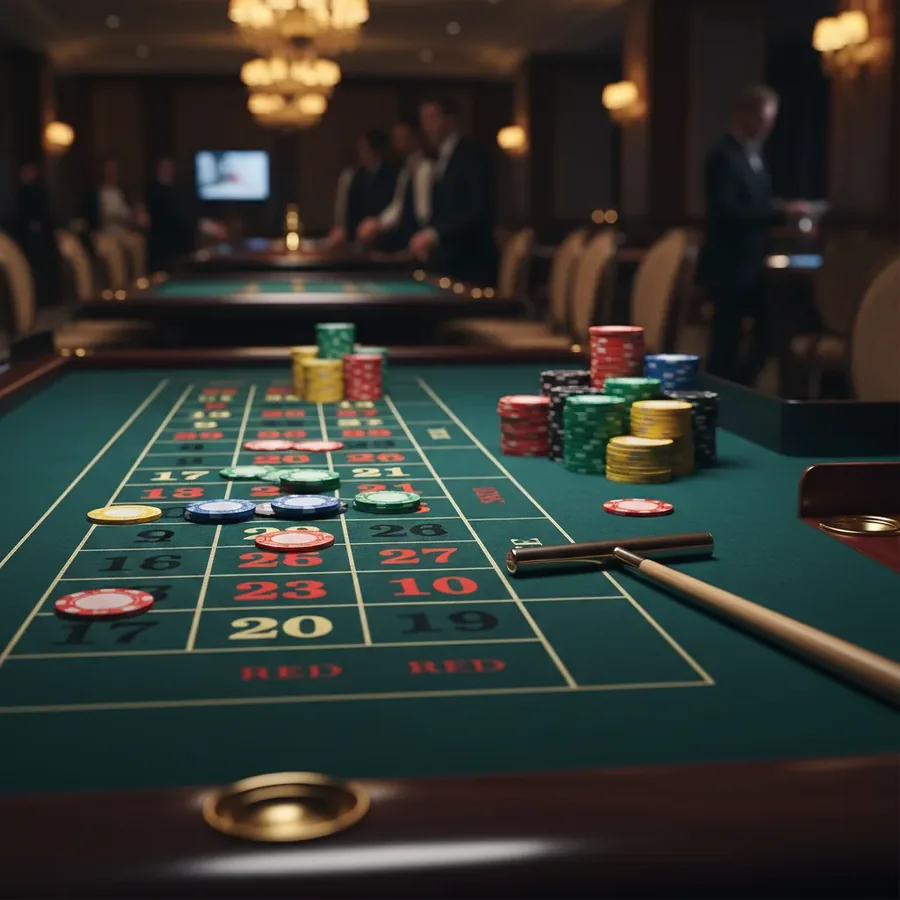
Which Bets Count Towards 10 Percent?
All roulette variants, including Quantum Roulette and Ultimate Roulette, fall under the 10 percent contribution rule for bonus wagering. Ezugi’s Ultimate Roulette offers multipliers up to 1,000x but still restricts its contribution percentage despite high volatility. Playtech’s Quantum version also maintains this limit regardless of the enhanced multiplier features available during gameplay. Players cannot bypass the restriction by choosing tables with higher payout potential or special side bets.
Live dealer options like Blaze Roulette from Authentic Gaming adhere strictly to the same 10 percent contribution policy. The presence of a live host between 19:00-01:00 CEST does not exempt the game from these bonus terms. Every chip placed on the digital felt counts equally toward the limited contribution pool. This uniformity applies across all providers, ensuring consistent rules regardless of the software developer.
Side bets and special features within these live tables do not receive separate treatment or higher contribution rates. Even if a bet covers multiple numbers or triggers a bonus round, it remains subject to the standard 10 percent cap. The 100 free spins component of the welcome package operates independently of these table restrictions. Players must prioritize slots if they intend to clear the main bonus funds quickly.
100 Euro Bankroll: 100 Rounds Simple Chances
A 100 Euro bankroll allows for exactly 100 rounds of betting on simple chances like Red/Black at a 1 Euro stake per spin. European Roulette provides a 2.70 percent house edge, meaning the expected loss after 100 spins is approximately 2.70 Euros. This calculation assumes an average bet size and does not account for variance or streaks that may deplete funds faster. The player retains a high probability of preserving most of the initial capital over this short duration.
French Roulette improves these odds slightly by reducing the house edge to 1.35 percent through the La Partage rule. On even-money bets, losing to zero refunds half the stake, effectively halving the disadvantage compared to the European variant. Over 100 rounds at 1 Euro each, the expected loss drops to just 1.35 Euros. This makes French tables the optimal choice for stretching a small bankroll during bonus play.
American Roulette presents a significantly worse scenario with a 5.26 percent house edge due to the double zero sector. A 100 Euro bankroll facing this edge would expect a loss of 5.26 Euros over the same 100 rounds. The additional green pocket increases the frequency of losses on all outside bets without improving payout ratios. Players seeking to maximize their 100 Euro sample size should avoid American wheels entirely.
Step-by-Step to Your First Straight Bet
Placing a straight bet involves selecting a single number on the roulette layout, such as the number 17, and confirming the chip value. This wager pays out at 35:1 if the ball lands on the chosen sector, offering the highest possible return per unit risked. In European Roulette, the probability of winning this specific bet is 1 in 37, reflecting the single zero configuration. The payout remains constant regardless of previous outcomes, as each spin is an independent event.
The house edge on this bet is 2.70 percent in European Roulette, identical to other wagers due to the fixed payout structure. Casino operators maintain this margin by paying 35:1 instead of the true odds of 36:1, retaining the difference as profit. Over thousands of spins, this mathematical advantage ensures the casino remains profitable despite occasional large wins. Players should recognize that no strategy can overcome this built-in statistical deficit.
In contrast, the Five Number Bet on American Roulette carries a disastrous 7.89 percent house edge, making it the worst option available. This bet covers 0, 00, 1, 2, and 3 but pays only 6:1, far below the true odds of 7.2:1. No equivalent exists in European or French variants, highlighting the structural disadvantage of the American wheel. Savvy players will never place this specific wager when better alternatives are available.
What Doesn't Count: Red and Black Simultaneously
Betting on both Red and Black simultaneously in a single spin results in a net loss due to the presence of the zero pocket. If the ball lands on zero, both outside bets lose entirely, creating a guaranteed negative expectation for this combined action. This strategy fails to hedge risk because the house edge applies to the total amount wagered on both sides. The player loses twice the stake whenever zero appears, accelerating bankroll depletion.
The La Partage rule in French Roulette mitigates this loss slightly by refunding half the stake on even-money bets when zero hits. However, since both Red and Black are even-money bets, the player only recovers half of the combined lost amount. The remaining half constitutes a pure loss, maintaining the 1.35 percent house edge on the total wagered volume. This rule prevents total loss but does not eliminate the mathematical disadvantage of covering all outcomes.
Covering every possible outcome on the table guarantees a loss equal to the house edge multiplied by the total bet size. For example, betting on all numbers plus zeros creates a scenario where the payout never exceeds the total investment. This approach is fundamentally flawed as it ignores the random nature of the wheel and the fixed payout limits. Players should focus on single-side strategies rather than attempting to cover the entire board.
Roulette bet types at a glance
| Bet | Payout | Win Chance | Numbers Covered | House Edge |
|---|---|---|---|---|
| Roulette Amerikanisch – Five Number Bet (0, 00, 1, 2, 3) | Five Number 6:1 (deckt 5 von 38 Sektoren) | 92.11% | Einzige Wette am amerikanischen Rad mit Edge über 5,26% – „Fallenwette“. Kein Äquivalent am europäischen Rad | 7.89% |
| Roulette Französisch, innere Einsätze (La Partage gilt nicht) | Straight 35:1, Split 17:1, Street 11:1, Corner 8:1, Six Line 5:1, Dozen 2:1, Column 2:1 | 97.30% | Rad gleich (37 Sektoren), aber La Partage/En Prison gilt nicht für innere Einsätze – Edge bleibt europäisch | 2.70% |
| Roulette Französisch mit La Partage (gerade Chancen) | Rot/Schwarz 1:1 (bei 0 Rückerstattung 50%), Odd/Even 1:1, Low/High 1:1; Innere Einsätze ohne La Partage: Straight 35:1, Split 17:1, Street 11:1, Corner 8:1 | 98.65% | Bei 0 wird die Hälfte des Einsatzes auf gerade Chancen zurückerstattet (Rot/Schwarz, Pair/Impair, Manque/Passe). En Prison gibt denselben 1,35%. Regel gilt NUR für gleiche Einsätze | 1.35% |
| Roulette Europäisch (einfache Null, 37 Sektoren) | Straight 35:1, Split 17:1, Street 11:1, Corner 8:1, Six Line 5:1, Dozen 2:1, Column 2:1, Rot/Schwarz 1:1, Odd/Even 1:1, 1-18/19-36 1:1 | 97.30% | 37 Sektoren (1–36 + 0); Auszahlungen wie für 36 Sektoren – daher konstanter Edge auf ALLE Wetten | 2.70% |
| Roulette Amerikanisch (doppelte Null, 38 Sektoren) | Straight 35:1, Split 17:1, Street 11:1, Corner 8:1, Six Line 5:1, Dozen 2:1, Column 2:1, Rot/Schwarz 1:1 | 94.74% | 38 Sektoren (1–36 + 0 + 00); Auszahlungen wie beim europäischen Rad, aber der zusätzliche Sektor verdoppelt den Hausvorteil | 5.26% |
Straight 35:1 vs Dozen 2:1 Hit Rate
The Straight bet pays 35:1 on the French Roulette variant with an RTP of 97.30% and a house edge of 2.70%, covering only one specific number out of thirty-seven sectors. This low hit frequency means players must endure many non-winning spins to trigger the high payout, making the bankroll depletion rate significantly faster than on even-money bets. The player accepts this volatility in exchange for the potential of a large single-spin return that offsets the frequent small losses accumulated during the session.
Dozen bets pay 2:1 and cover twelve numbers, offering a much higher probability of winning compared to the straight wager on the same European wheel. With a house edge of 2.70%, the expected loss per euro wagered remains identical to the straight bet, but the variance is considerably lower due to more frequent wins. This structure allows for longer playing sessions with smaller fluctuations, as the player recovers stakes regularly rather than waiting for rare straight-number hits to occur.
American Roulette introduces a double zero sector, increasing the total count to thirty-eight numbers while maintaining the 35:1 payout for straights and 2:1 for dozens. This additional green pocket raises the house edge to 5.26%, effectively doubling the theoretical cost of play compared to the European version for both bet types. Consequently, the player's bankroll erodes twice as fast on average, making the American variant a statistically inferior choice for those seeking to maximize their playing time.
Max Bet Per Number vs. Max Bet Per Round
Quantum Roulette by Playtech imposes a maximum bet limit of 5,000 EUR per round, which caps the total exposure regardless of how many numbers are covered in a single spin. This ceiling prevents players from placing unlimited wagers across multiple sectors, thereby restricting the potential magnitude of losses or gains derived from high-stakes strategies like the Martingale system. The limit applies to the entire round, ensuring that the casino's liability remains controlled even when players attempt to spread their capital across numerous table positions.
Ultimate Roulette by Ezugi also features a maximum bet of 5,000 EUR per round, but it enhances the standard game with multipliers affecting up to five numbers simultaneously. These multipliers can reach values between 50x and 1,000x, with a possibility of doubling up to 2,000x, which dramatically increases the variance within the fixed betting cap. Players must carefully manage their stake allocation because the high multiplier potential creates extreme outcomes that deviate significantly from the standard 97.30% RTP expectation.
Blaze Roulette by Authentic Gaming sets a maximum bet of 5,000 EUR per round on a European wheel with thirty-seven sectors, matching the limits of other live providers. The game features a live host operating between 19:00 and 01:00 CEST, adding a social element that does not alter the mathematical constraints of the max bet rule. This uniformity across platforms ensures that high rollers face consistent risk management requirements, preventing any single provider from offering unlimited leverage on complex betting combinations.
How Long for 40x Wager with 10 Percent?
The welcome bonus offers 300% up to 2,000 EUR, requiring a wagering requirement of 40 times the bonus amount before withdrawal is permitted. Table games contribute only 10 percent toward meeting this turnover target, meaning that every euro wagered on roulette counts as merely ten cents toward the goal. This low contribution rate forces players to bet ten times the nominal amount on tables compared to slots, significantly extending the time required to clear the bonus funds.
For a maximum bonus of 2,000 EUR, the total wagering obligation amounts to 80,000 EUR (2,000 x 40). Since roulette contributes 10 percent, the player must actually place bets totaling 800,000 EUR on eligible table games to fulfill the requirement completely. This massive volume of play exposes the bankroll to the house edge repeatedly, resulting in a high statistical probability of depleting the balance before the wagering condition is satisfied.
Using French Roulette with its 2.70% house edge, the expected loss from wagering 800,000 EUR is calculated as 21,600 EUR (800,000 x 0.027). This theoretical loss far exceeds the initial bonus value of 2,000 EUR, indicating that clearing the bonus via table games is mathematically unfavorable. The player should recognize that the 10 percent contribution rule effectively negates the value of the bonus for roulette enthusiasts due to the compounding effect of the house advantage over such high volumes.
Even Chances vs Straight: Variance Comparison
Even money bets like Red/Black in French Roulette pay 1:1 and carry a house edge of 2.70% on the standard European wheel. When the ball lands on zero, the La Partage rule refunds fifty percent of the stake on these specific wagers, reducing the effective house edge to 1.35%. This mechanism significantly lowers the variance compared to straight bets, allowing for more stable bankroll management and longer session durations with predictable small losses.
Straight bets on the same French wheel pay 35:1 but do not benefit from the La Partage rule, retaining the full 2.70% house edge. The absence of partial refunds on losing spins increases the volatility, as losses accumulate rapidly without the cushion provided by even-money protections. Players choosing this route experience wider swings in their balance, with long droughts of wins punctuated by occasional large payouts that rarely compensate for the cumulative edge.
American Roulette eliminates the La Partage rule entirely, forcing even money bets to suffer the full 5.26% house edge due to the double zero. Straight bets here also carry a 5.26% edge, but their payout structure creates higher variance than the reduced-edge European even money bets. The combination of higher house advantage and greater volatility makes the American variant particularly dangerous for players attempting to preserve their deposit against the mathematical odds.
Minimum and Maximum Bets Limit Every Martingale
The minimum bet for Quantum Roulette is 0.10 EUR, starting the progression at a very low threshold that allows for extensive martingale sequences. However, the maximum bet of 5,000 EUR per round eventually halts the doubling strategy, preventing recovery of previous losses once the table limit is reached. This hard cap ensures that no matter how many consecutive losses occur, the player cannot increase their stake beyond the allowed maximum, guaranteeing a final unrecoverable deficit.
Ultimate Roulette shares the 0.10 EUR minimum and 5,000 EUR maximum limits, creating identical constraints for progressive betting systems. The presence of multipliers up to 1,000x might tempt players to abandon strict doubling, but the underlying table limits still restrict the ability to chase losses systematically. Any deviation from the standard martingale logic must account for the fact that the maximum bet ceiling will inevitably truncate the progression, leading to substantial financial shortfalls.
Blaze Roulette maintains the 0.20 EUR minimum and 5,000 EUR maximum, slightly raising the entry cost for each progression step compared to other variants. The European wheel's 2.70% house edge remains constant, meaning the probability of hitting a losing streak is independent of the bet size. Players relying on martingale strategies will find that the 5,000 EUR limit is reached after approximately thirteen consecutive doublings from the minimum, rendering the system ineffective for long-term profitability.
Error: Expecting La Partage at the Wrong Table
La Partage is a rule that returns half of even-money bets when the ball lands on zero, applying strictly to French Roulette tables. This mechanism reduces the house edge on Red/Black from 2.70% down to 1.35%, effectively halving the theoretical loss rate for those specific wagers. Players attempting this strategy on American Roulette wheels face a 7.89% house edge instead, as the double-zero layout excludes such refund rules entirely. The payout remains 1:1, but the financial protection vanishes without the European single-zero advantage.
Straight bets in French Roulette do not qualify for the La Partage refund, retaining the standard 2.70% house edge despite the favorable outer-bet conditions. A Corner bet paying 8:1 suffers this higher edge compared to the 1.35% available on Even/Odd options, creating a significant disparity in value between inner and outer wagers. Consequently, players seeking maximum retention must avoid inner combinations if they wish to utilize the half-refund safety net provided by the En Prison variant. The mathematical distinction forces a strategic choice between high-payout precision and low-variance recovery mechanisms.
The En Prison rule offers an alternative path to the same 1.35% house edge, allowing the original stake to remain 'imprisoned' for the next spin rather than being immediately refunded. This option applies only to same bets like Manque or Passe, ensuring that the player retains full exposure to the wheel without losing capital on a zero outcome. Implementing this rule requires patience, as the recovery depends on subsequent spins landing on the imprisoned number or another winning even-money sector. Without this specific rule, the casino retains the full 2.70% advantage on all even-money propositions regardless of the zero event.
Wheel Speed and Ball Toss in Real Wheel
Quantum Roulette by Playtech operates with stakes ranging from 0.10 EUR to 5,000 EUR, incorporating quantum multipliers that can reach up to 500x on selected numbers. These multipliers significantly alter the base payout structure, introducing volatility that exceeds standard roulette mechanics while maintaining the core 37-sector European wheel format. The integration of random multipliers means that a standard Straight bet payout of 35:1 can be amplified, though the underlying house edge remains tied to the wheel geometry. Players must account for these variable payouts when calculating potential returns against the fixed wagering contribution of 10% for table games.
Ultimate Roulette by Ezugi features multipliers affecting up to five numbers simultaneously, offering ranges from 50x to 1,000x with potential doubling up to 2,000x for specific outcomes. This mechanic increases the variance considerably, as the RTP stabilizes at 97.30% despite the explosive payout possibilities attached to individual spin results. The betting limits mirror the industry standard of 0.10 EUR to 5,000 EUR, allowing both casual players and high rollers to engage with the enhanced multiplier system. The presence of multiple simultaneous multipliers creates complex win scenarios where standard payout tables are temporarily overridden by the quantum boost.
Blaze Roulette by Authentic Gaming utilizes a European wheel with 37 sectors and a live host operating between 19:00 and 01:00 CEST, ensuring consistent oversight during peak hours. The game maintains a strict maximum payout ratio of 35:1 for Straight bets, preventing the multiplier abuse seen in other variants while preserving the 97.30% RTP. Betting starts at 0.20 EUR and extends to 5,000 EUR, providing flexibility within the structured payout framework defined by the single-zero layout. The host schedule dictates availability windows, requiring players to plan sessions around the specified operational hours to access the live dealer interface.
House Edge 2.70 Percent in One Number
A Straight bet on any single number in European Roulette pays 35:1, covering one sector out of thirty-seven total pockets on the wheel. This specific payout structure generates a constant 2.70% house edge across all wagers, as the casino retains a mathematical advantage derived from the discrepancy between true odds and paid odds. Unlike American Roulette which carries a 5.26% edge due to the extra double-zero pocket, the European variant offers a more favorable theoretical return for the player. The consistency of this edge ensures predictable long-term losses relative to the volume of wagers placed on the table.
Split bets covering two adjacent numbers pay 17:1, maintaining the identical 2.70% house edge inherent to the European wheel configuration. This payout ratio reflects the probability of hitting one of two targets out of thirty-seven possible outcomes, aligning perfectly with the statistical expectation of the game. Street bets paying 11:1 for three numbers follow the same mathematical principle, reinforcing the uniformity of the house advantage across different bet types. The structural integrity of the wheel ensures that no variation in bet size alters the fundamental percentage retained by the establishment.
Corner bets spanning four numbers offer an 8:1 payout, continuing the pattern of a 2.70% house edge that defines the European roulette experience. Dozen bets paying 2:1 for twelve numbers and Column bets with the same ratio adhere to this standard, demonstrating the wheel's balanced design. Six Line bets covering six numbers pay 5:1, further illustrating how the casino calculates returns based on the single-zero probability model. Every wager type converges on this same efficiency metric, eliminating variance in house advantage regardless of the chosen betting strategy.
Multipliers up to 500x Lower the Base Payout
The Quantum Multiplier feature in Playtech's version can award up to 500x on selected numbers, dramatically increasing the potential return on a single Straight bet. While the base payout remains 35:1, the application of these multipliers introduces high volatility that deviates from the standard 97.30% RTP observed in traditional formats. Players engaging with this variant must recognize that the enhanced payouts come at the cost of increased risk, as the multiplier distribution affects the overall expected value. The betting range of 0.10 EUR to 5,000 EUR allows for significant exposure to these volatile outcomes without altering the underlying table limits.
Ezugi's Ultimate Roulette extends the multiplier concept by applying boosts to up to five numbers simultaneously, with values reaching 1,000x and doubling up to 2,000x. This expansion of multiplier coverage increases the frequency of large wins but also amplifies the variance experienced by players over extended sessions. The RTP remains stable at 97.30%, indicating that the mathematical edge is preserved despite the flashy payout enhancements delivered through the live stream. The integration of these mechanics requires careful bankroll management to withstand the inevitable swings caused by the randomized multiplier assignments.
Authentic Gaming's Blaze Roulette restricts multipliers by enforcing a hard cap of 35:1 on all payouts, effectively removing the high-volatility element found in competitor titles. This constraint ensures that the game adheres strictly to the 97.30% RTP associated with standard European roulette, providing a more predictable experience for conservative players. The absence of quantum boosts means that the house edge remains a steady 2.70%, unaffected by external multiplier events or temporary payout alterations. Players seeking stability over excitement will find this variant aligns with traditional expectations of roulette mechanics and payout structures.
Why the Ball Has No Memory
The Five Number Bet in American Roulette covers sectors 0, 00, 1, 2, and 3, carrying a distinct house edge of 7.89% that exceeds all other wagers on the wheel. This specific bet pays 6:1, covering five out of thirty-eight possible outcomes, yet the payout fails to compensate for the increased probability of loss due to the double-zero layout. It stands as the sole exception on the American wheel with an edge above 5.26%, making it a statistically inferior choice compared to standard Straight or Split bets. Players avoiding this trap maintain a lower house edge of 5.26% on other wagers, preserving their bankroll against the unfavorable mathematics of this particular combination.
European Roulette offers a superior alternative with a consistent 2.70% house edge across all bet types, derived from its thirty-seven-sector wheel design. The absence of the double-zero pocket reduces the casino's advantage significantly, providing better long-term value for players utilizing standard betting strategies. Straight bets paying 35:1 and Even-Money bets paying 1:1 both reflect this optimized edge, ensuring uniformity in the mathematical expectation. The structural difference between the thirty-eight and thirty-seven sector layouts highlights the critical impact of the zero pocket on overall game profitability.
American Roulette presents a 5.26% house edge on all standard wagers due to the inclusion of the additional double-zero sector, which doubles the disadvantage compared to the European variant. Despite paying identical ratios such as 35:1 for Straight bets, the presence of the extra pocket ensures the casino retains a larger portion of the wagered amount. This elevated edge applies uniformly to Dozen bets paying 2:1 and Column bets, eliminating any strategic avenue to reduce the house advantage through bet selection. The mathematical reality remains unchanged regardless of the betting pattern employed, as the wheel geometry dictates the permanent retention rate.
Contact
Live - online chat
Banking









Providers












Thunderpick Casino 2026